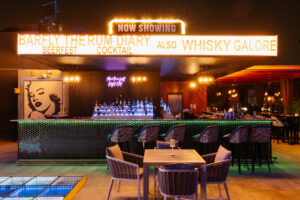
A booth can be beautifully designed and still be forgettable.
The logo is visible. The screens are running. The brochures are neatly stacked. Visitors stop for a photograph, collect a giveaway and move to the next stand. By the end of the event, the brand has technically been present, but very little has happened between the business and the audience.
That is the difference between occupying space and creating an experience.
For brands investing in experiential marketing Dubai, an event should give people something they can participate in, understand or remember beyond the visual setup. The booth is only the physical container. The real marketing happens through what people experience inside and around it.
In Dubai’s crowded exhibition, hospitality, retail and launch environment, brands need to think beyond stand design and build the entire audience journey deliberately.
A Booth Gives You Space. It Does Not Give You a Strategy.
Booth design matters. It helps attract attention, communicate the brand identity and create an environment people want to enter.
But it cannot answer the most important question:
Why should someone stay?
That answer needs to come from the experience.
A technology company could allow visitors to test a product rather than watching a sales video. A food brand could build the experience around tasting and discovery. A property company might create a guided project journey rather than placing brochures across a counter.
The physical design should support what the audience is doing, not become the entire idea.
PAL DMC’s event marketing services in Dubai are built around strategy, audience engagement and on-ground experiences rather than treating the event stand as an isolated design project.
If your upcoming event has a completed booth concept but no clear audience journey, email pal@paldmc.com to review the experience before production is finalised.
The Experience Starts Before Someone Reaches Your Stand
One of the biggest missed opportunities in experiential marketing happens before the venue opens.
Visitors often arrive at Dubai exhibitions with limited time and many brands competing for attention. Some already know which stands they want to visit.
That means the event experience can begin through digital marketing before the physical interaction.
Content might introduce what visitors will be able to experience at the stand. Sales teams can pre-book relevant meetings. Social media can preview a demonstration. A campaign can give existing customers or prospects a specific reason to visit.
The objective is not simply to announce:
“We will be at Stand 42.”
Instead, explain what becomes possible by visiting.
A potential customer is far more likely to remember “come test the new product with our team” than another generic event announcement.
This is where experiential marketing begins to work with wider campaign planning rather than starting at the exhibition entrance.
Give Visitors Something to Do Within the First Minute
Passive booths put too much pressure on staff.
Someone walks in, an employee approaches, and the entire experience becomes a sales conversation.
Experiential environments give visitors another entry point.
They might try something, explore something, customise something, answer a useful question or experience a demonstration before speaking with the team.
This lowers the pressure while giving staff more context for the conversation that follows.
For example, a beauty brand exhibiting at a lifestyle event might create a quick consultation or product discovery experience. A hospitality brand could create a sensory element related to the property rather than simply looping destination footage on a screen.
The interaction does not need to be technologically complex.
It needs to help the visitor understand something meaningful about the brand.
PAL DMC’s brand activation services in Dubai can support brands that need to turn a physical space into a more participatory customer experience.
Your Staff Are Part of the Experience Design
This is something no booth rendering shows.
A visitor arrives and three team members immediately approach them. Another guest waits because nobody notices them. Someone asks a specific product question and receives three different answers.
The environment may look premium while the experience feels disorganised.
Before the event, define how the team should work inside the space.
Who welcomes visitors? Who handles technical questions? Who manages high-intent prospects? Who is responsible for creators or media? Who records useful lead information?
This matters because experiential marketing is delivered by people as much as by physical design.
Teams should also understand the difference between starting a conversation and delivering a memorised sales pitch. Visitors need enough space to experience the brand before being pushed toward a commercial discussion.
If your event involves multiple sales, marketing and operational teams, call or WhatsApp PAL DMC on +971 50 135 7072 to discuss how campaign messaging and on-ground execution can be aligned.
Stop Using Giveaways as the Main Attraction
A giveaway can increase footfall.
It can also attract people who are interested only in the giveaway.
That does not mean brands should never use competitions, gifts or samples. It means the incentive should support the experience rather than replace it.
A useful giveaway reinforces the product or message.
A random high-value prize may generate hundreds of entries without helping the audience understand the company.
The same applies to games.
If the activity could belong to any business simply by changing the logo, ask whether it is actually helping the brand communicate something distinctive.
Experiential marketing works best when participation and brand understanding happen at the same time.
Create a Reason for People Outside the Venue to Care
The physical audience is only one part of the opportunity.
A well-planned event can generate content for people who never attend.
Instead of focusing entirely on photographs of the booth, capture the actual experience: product demonstrations, visitor participation, useful questions, team expertise and genuine reactions.
This helps digital audiences understand what is happening rather than simply seeing evidence that the company booked event space.
Creators and media can also extend the experience when there is a genuine story worth communicating. PAL DMC’s PR services in Dubai can support event campaigns where the on-ground experience needs wider storytelling and media amplification.
The key is to plan content capture around the experience rather than interrupting the experience for content.
Do Not Let Lead Capture Ruin the Moment
There is a point during many events when the experience suddenly becomes a form.
The visitor has enjoyed a product demonstration. Then someone hands them a tablet and asks for a long list of personal information.
Lead capture should feel proportionate to the interaction.
A visitor asking detailed questions about a property project may reasonably be asked for information that helps qualify their interest. Someone casually testing a consumer product may require a lighter next step.
Instead of measuring success by the number of contacts captured, look at what those contacts actually represent.
Were they relevant prospects? Did they request follow-up? Which products or services interested them? Did conversations progress after the event?
A smaller number of relevant conversations can be significantly more useful than a large database with little context.
Pal Bhattia’s Perspective: Design What People Will Remember Doing
From Pal Bhattia, Founder of PAL DMC’s perspective, one useful test for experiential marketing is asking what a visitor will tell someone else about the experience afterwards.
If the answer is simply, “They had a nice booth,” the idea may not be strong enough yet.
A better answer sounds like an action.
“I tried the product.”
“They showed me how it worked.”
“I spoke with someone who answered my questions.”
“I experienced something I had not seen before.”
The shift is subtle but important. People tend to remember participation more clearly than presentation.
This is why PAL DMC approaches event marketing and brand activation as customer experiences first and branded environments second.
Use an Experience Scorecard, Not Just an Event Report
When the event ends, evaluate more than footfall.
A practical scorecard can ask:
- Did the right audience stop?
- How many visitors actively participated?
- Which interaction generated the strongest interest?
- What questions did visitors repeatedly ask?
- How many relevant conversations required follow-up?
- Which content assets can be reused?
- What happened to qualified prospects afterwards?
These questions produce information that can improve the next event.
They also stop businesses from declaring success simply because the booth looked busy at 4 PM.
Brands wanting to see how PAL DMC approaches different campaign objectives can explore the agency’s case studies.
Frequently Asked Questions
What is experiential marketing in Dubai?
Experiential marketing creates direct, participatory interactions between a brand and its audience. In Dubai, it can include exhibitions, product experiences, pop-ups, launch events, demonstrations, hospitality activations and interactive brand environments.
Is experiential marketing the same as event marketing?
Not exactly. Event marketing covers the broader strategy used to promote and maximise an event. Experiential marketing focuses specifically on what audiences participate in and experience. A strong event campaign can use both.
Why is a booth alone not enough at an event?
A booth provides physical visibility, but it does not automatically create engagement. Visitors need a meaningful reason to enter, stay, interact and remember the brand. Experience design creates that additional layer.
What makes an event experience memorable?
Memorable experiences usually involve participation, relevance and clarity. Visitors should understand why the interaction matters to them and leave with a stronger understanding of the product, service or brand.
Does experiential marketing need expensive technology?
No. Technology can support an experience, but it is not required. Product trials, demonstrations, personalisation, consultations and well-designed human interactions can all create effective experiential campaigns.
How can experiential marketing generate leads?
Events can generate leads through appointments, consultations, registrations and relevant follow-up journeys. Lead capture should match the level of customer intent rather than collecting unnecessary information from every visitor.
How should brands measure experiential marketing?
Measurement may include participation, qualified conversations, product trials, appointments, enquiries, content engagement and subsequent customer actions. The right metrics depend on the objective set before the event.
Can PAL DMC manage experiential marketing campaigns in Dubai?
Yes. PAL DMC works across event marketing, brand activation, PR, social media and wider digital strategy, helping brands connect physical experiences with audience engagement, content and measurable customer journeys.
Make the Booth the Beginning, Not the Whole Experience
A well-designed booth can earn a visitor’s attention. What happens next determines whether that attention becomes useful.
For brands investing in experiential marketing Dubai, the strongest event experiences give people something meaningful to participate in, create better conversations and continue beyond the venue itself.
If your next event needs more than a visually impressive stand, visit the PAL DMC website or meet the team at Iris Bay, Office 2505, 25th Floor, Business Bay, Dubai to build an event experience around audience behaviour and measurable outcomes.